From Death Valley to Vosges: Understanding Faulting & Tectonics
When you encounter the term "horst," your mind might first drift to prominent figures or discussions about personal wealth, perhaps even topics such as
Horst Paulmann's net worth. However, in the captivating field of geology, "horst" describes something entirely different and far more fundamental to our planet's structure: a massive, uplifted block of the Earth's crust. From the sun-baked, sunken expanse of Death Valley to the ancient, rugged silhouette of the Vosges Mountains, our world's landscapes are constantly being sculpted by immense, unseen forces. These dramatic features are born from the powerful geological processes of faulting and tectonics, revealing the Earth's dynamic and ever-changing nature. Understanding these mechanisms not only illuminates the beauty of our planet but also offers critical insights into natural hazards and resource formation.
Horsts and Grabens: Earth's Dynamic Sculptors
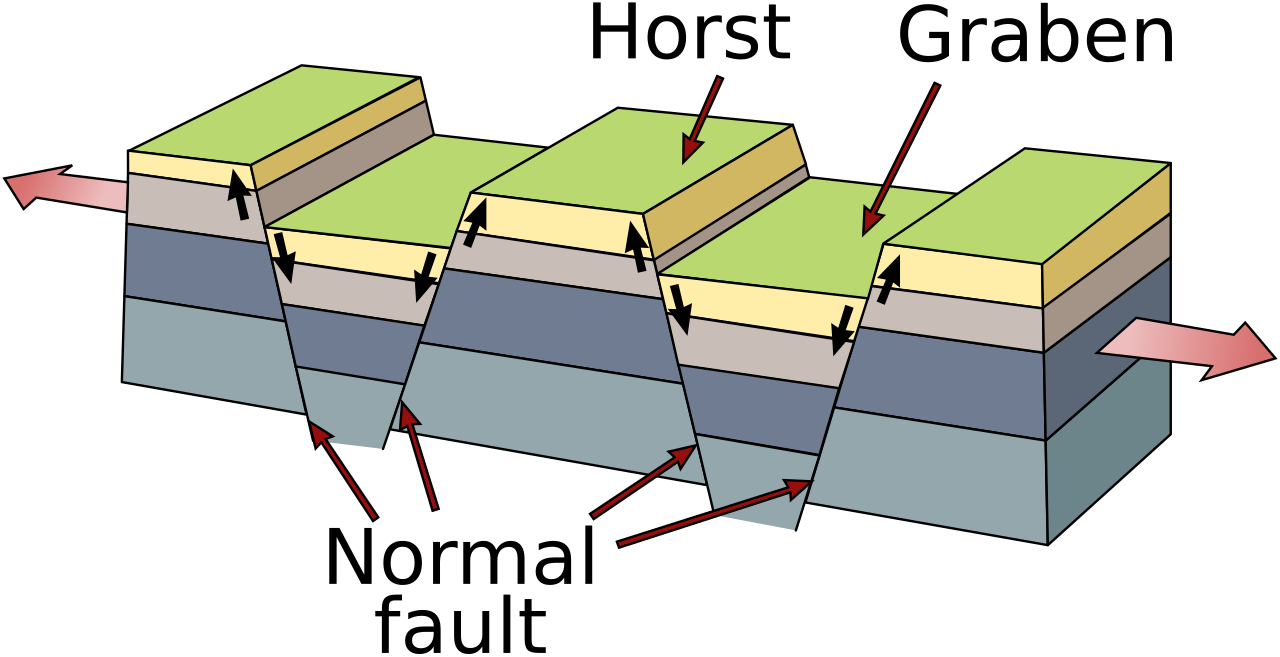
At the heart of many striking landforms lie horsts and grabens – fundamental geological structures born from extensional forces within the Earth's crust. Imagine a vast, rigid sheet of rock being pulled apart; what happens next is akin to the formation of these features.
*
Horsts are elongate fault blocks that have been raised upward relative to the surrounding areas. Think of them as the "shoulders" or "ridges" of the landscape, standing tall amidst lower terrain. A prime example is the Vosges Mountains in France, a majestic range that owes its elevation to these tectonic uplifts.
*
Grabens, conversely, are the depressed, sunken blocks of the Earth's crust, lowered relative to their surroundings. They are the "valleys" or "troughs" in this geological dance. The dramatic Death Valley in California, a place of extreme heat and iconic landscapes, is a classic graben, as is the profound Jordan–Dead Sea depression.
These remarkable features can vary immensely in scale, from mere centimeters to tens of kilometers wide, with vertical movements reaching thousands of feet. The sheer magnitude of these shifts highlights the powerful forces at play deep within our Earth.
The Mechanics of Faulting: Normal Faults Explained
The creation of horsts and grabens is directly attributable to a specific type of geological fracture known as a normal fault. Faulting is essentially the fracturing and displacement of rock along a fault plane.
*
Normal Faults: These are characterized by the hanging wall (the block of rock above the fault plane) moving downward relative to the footwall (the block below the fault plane). This movement is a direct result of tensional forces – a pulling apart or stretching of the Earth's crust.
*
Steeply Dipping Planes: The faults that define horsts and grabens are typically steeply dipping, meaning they plunge at a sharp angle into the Earth.
*
Opposing Dips: For a horst to form, the normal faults on either side generally dip *away* from each other, pushing the central block upward. Conversely, for a graben, the bounding normal faults usually dip *toward* each other, allowing the central block to subside.
*
Minimal Tilting: A distinctive characteristic of these fault blocks is that the internal blocks themselves are often scarcely tilted, even though they've experienced significant vertical movement. This suggests that the movement along the bounding faults has been relatively even.
These tensional forces are often linked to regional uplift or the formation of salt domes, which can create localized stress fields. Interestingly, horsts and grabens frequently develop on the crests of domes or anticlines – upward-arching folds in the Earth's crust – where the crust is most susceptible to stretching and fracturing.
For a deeper dive into these fascinating structures, explore
Rift Valleys & Horsts: Earth's Dynamic Fault Blocks Explained.
Iconic Examples: From Death Valley to the Vosges
Understanding horsts and grabens becomes much clearer when we look at real-world examples that showcase their dramatic impact on landscapes.
*
Death Valley, USA: This national park is perhaps the most famous example of a graben. Its incredibly low elevation (Badwater Basin is the lowest point in North America at 282 feet below sea level) is a direct result of extensional faulting. Over millions of years, the land between parallel normal faults has sunk, creating a vast, arid basin surrounded by towering mountain ranges, which themselves are often uplifted horsts. The ongoing tectonic activity continues to shape this region, making it a living laboratory for geological study.
*
Vosges Mountains, France: In stark contrast to Death Valley's sunken expanse, the Vosges Mountains represent a classic horst structure. This ancient mountain range, flanking the western side of the Rhine Graben, was uplifted as the surrounding crust subsided. The distinct, block-like appearance and the relatively flat summits are typical features of horst mountains. Their history tells a story of continental rifting and subsequent uplift that has shaped the geography of Western Europe.
*
Jordan–Dead Sea Depression: This is another profound example of a graben, forming part of the larger Afro-Arabian Rift System. The Dead Sea, Earth's lowest point on land, lies within this massive depression, continually sinking due to ongoing tectonic extension. The dramatic cliffs and arid landscapes surrounding the Dead Sea are a direct consequence of the faulting that created this remarkable geological feature.
*
Palestine Plateau: Located adjacent to the Jordan–Dead Sea depression, the Palestine Plateau serves as a horst, a raised block of land complementing the sunken graben. This juxtaposition highlights how horsts and grabens often occur side-by-side, forming a repeating pattern across large regions under tension.
These examples underscore that these aren't just theoretical concepts but tangible, impressive formations that define entire regions and ecosystems. Delve deeper into these iconic features with
Exploring Horsts and Grabens: Iconic Geological Fault Blocks.
Beyond the Basics: Tectonic Significance and Human Impact
The formation of horsts and grabens is more than just an academic curiosity; it has profound implications for our planet and humanity.
*
Rift Valleys and Vulcanism: Grabens are commonly associated with the early stages of continental rifting, where continents are actively pulling apart. These "rift valleys" often exhibit significant vulcanism. As the crust thins and stretches, magma can more easily rise to the surface, leading to volcanic activity, hot springs, and geothermal features. The East African Rift Valley, though a larger and more complex system, showcases many of these graben-related volcanic features.
*
Resource Formation: The subsidence of grabens can create basins where sediments accumulate over geological time. These sedimentary basins can become important reservoirs for oil, natural gas, and groundwater. Understanding the fault structures can aid in the exploration and extraction of these vital resources.
*
Seismic Activity: The very faults that create horsts and grabens are active geological structures. Movement along these normal faults is a primary cause of earthquakes in extensional tectonic settings. Living in or near such regions requires careful consideration of seismic hazards and adherence to building codes designed to withstand ground shaking.
*
Geothermal Energy: Areas with significant faulting and volcanic activity often harbor geothermal resources. Hot water and steam generated by the Earth's internal heat can be harnessed to produce electricity, offering a clean, renewable energy source.
Practical Insight: If you're exploring areas known for graben formation, like Death Valley, pay attention to the sharp geological boundaries between the valley floor and the surrounding mountains. These are often the visible traces of the normal faults that define these structures. The presence of fault scarps (small cliffs formed by recent fault movement) can indicate ongoing tectonic activity. Conversely, in horst regions like the Vosges, look for the broader, block-like elevations and the distinct, often linear valleys that separate them from adjacent landforms.
Conclusion
From the lowest points on Earth to majestic mountain ranges, horsts and grabens are undeniable proof of our planet's restless interior. These dramatic geological features, born from the simple yet powerful act of tectonic plates pulling apart, sculpt our world in breathtaking ways. While the term "horst" might have a different meaning in the context of personal finance or famous individuals, its geological significance is etched into the very fabric of continents. By understanding the forces of faulting and tectonics that create these incredible landforms, we gain a deeper appreciation for the Earth's dynamic processes, offering valuable insights into its past, present, and future.