Rift Valleys & Horsts: Earth's Dynamic Fault Blocks Explained
Our planet is a canvas of constant motion, sculpted by immense forces hidden beneath its surface. Among the most dramatic manifestations of this ceaseless activity are rift valleys and horsts – colossal geological features that carve depressions and raise mountain ranges, fundamentally shaping continents. These striking landscapes are direct results of tectonic stresses and faulting, providing critical insights into Earth's dynamic crustal processes. Understanding horsts and grabens is key to appreciating the planet's geological evolution, from the formation of vast depressions like Death Valley to the uplift of ancient mountain ranges.
Unveiling the Mechanics: Normal Faults and Tensional Forces
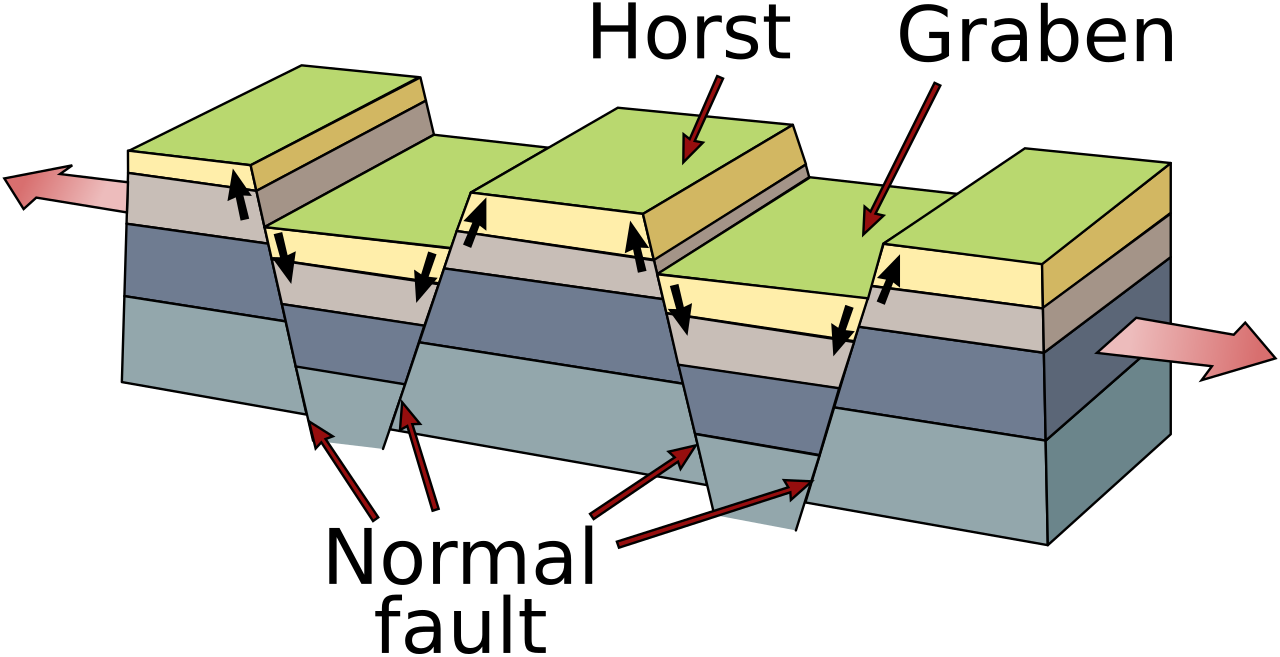
At the heart of horst and graben formation lies the powerful interplay of tensional forces and normal faults. When the Earth's crust is pulled apart, stretched thin by underlying convection currents in the mantle, it creates an environment of intense tensional stress. This stretching causes the brittle upper crust to fracture along planes of weakness, resulting in what geologists call normal faults.
Normal faults are characterized by a hanging wall (the block of crust above the fault plane) that moves downward relative to the footwall (the block below). In the context of horsts and grabens, these faults are typically steeply dipping. The movement along these faults is primarily vertical, with minimal tilting of the resultant blocks. The scale of these features can vary dramatically, from minor displacements spanning a few centimeters to monumental blocks tens of kilometers wide, with vertical movements reaching several thousands of feet.
Crucially, horsts and grabens are bounded on both sides by these normal faults. The orientation of these faults dictates whether a block is raised or lowered:
- For Horsts: The faults generally dip away from each other, pushing the central block upward relative to the surrounding areas.
- For Grabens: The faults typically dip toward each other, causing the central block to subside or drop down.
These features often occur in conjunction, forming complex patterns of alternating raised and lowered blocks. The underlying causes of such lateral tension are varied, including regional uplift (which can cause the crust to dome and then fracture) or even the less common process of salt dome formation. These zones of extension represent some of the most active and geologically fascinating regions on Earth.
Horsts: Earth's Elevated Plateaus and Mountains
A horst is a distinctive elongate fault block of the Earth's crust that has been uplifted, creating prominent topographical highs like plateaus or mountain ranges. Picture a section of the crust squeezed upwards between two downward-moving blocks. This upward movement is facilitated by the normal faults on either side dipping outwards, allowing the central block to rise relative to its surroundings.
These elevated landforms stand as stark reminders of intense geological activity. They are not merely static mountains; their formation speaks volumes about the historical stretching and fracturing of the crust. Horsts often exhibit rugged terrain, steep escarpments, and distinct geological formations, providing a window into the subsurface geology that has been brought to the surface.
Examples of Iconic Horsts:
- The Vosges Mountains, France: Located in northeastern France, the Vosges form a classic horst structure, rising dramatically from the Rhine Graben. Their formation is a testament to the regional tensional forces that have shaped Western Europe.
- The Palestine Plateau: Part of a larger regional uplift, this area exemplifies a horst, exhibiting significant elevation relative to the surrounding depressions, including the prominent Jordan Rift Valley.
Beyond their scenic beauty, horsts can be significant in terms of natural resources, exposing older rock layers that might contain valuable minerals or host unique ecosystems adapted to higher altitudes and distinct geological conditions. Geologists study horsts to reconstruct the history of regional extension and to understand seismic hazards associated with the active faults that define them.
Grabens and Rift Valleys: Depressions and Cradles of Volcanism
In stark contrast to horsts are grabens – elongate fault blocks that have been lowered or dropped down relative to the adjacent crust. These depressions form when two parallel normal faults dip inward towards each other, causing the block between them to subside. The term "graben" itself comes from the German word for "ditch" or "trench," aptly describing these sunken features.
When grabens reach significant scales, often tens to hundreds of kilometers in length and width, they are commonly referred to as rift valleys. These linear depressions are hallmark features of continental rifting, where continents are actively pulling apart. The stretching and thinning of the crust in these zones often lead to decompression melting in the underlying mantle, making rift valleys veritable cradles of volcanism and seismic activity.
The Earth's most famous rift valleys are characterized by active volcanoes, hot springs, and frequent earthquakes, signifying ongoing tectonic extension. The thinning crust allows magma to ascend closer to the surface, creating volcanic peaks, basaltic plains, and even new ocean basins over geological time.
Prominent Examples of Grabens and Rift Valleys:
- The Jordan–Dead Sea Depression: This profound graben is a segment of the larger Great Rift Valley system, extending from Africa through the Middle East. It hosts the lowest land elevation on Earth at the Dead Sea, a testament to the immense subsidence caused by faulting.
- Death Valley, USA: Nestled in the Basin and Range Province of the Western United States, Death Valley is a classic graben. Its dramatic landscape of extreme temperatures, vast salt flats, and surrounding mountain ranges (which are often horsts) beautifully illustrates the effects of tensional tectonics.
- The East African Rift Valley: While not explicitly mentioned in the context, this is arguably the most famous and active example of a continental graben system, where Africa is slowly splitting apart, accompanied by widespread volcanism and earthquake activity.
Grabens and rift valleys are not only geological marvels but also significant ecological zones, often collecting water to form lakes (like Lake Tanganyika or Lake Malawi in the East African Rift) and fostering unique biodiversity. They are also crucial for human settlement and economic activity, sometimes hosting rich mineral deposits or geothermal energy sources.
Global Impact and Observing Earth's Fault Blocks
The formation of horsts and grabens is a fundamental process in shaping Earth's surface, particularly in regions experiencing extensional tectonics. These fault-block landscapes can occur individually or, more commonly, as part of vast, intricate systems where multiple horsts and grabens lie adjacent to one another. Such systems reveal the complex history of crustal stretching and the development of major rift zones that can ultimately lead to the breakup of continents and the formation of new ocean basins.
Understanding these dynamic fault blocks is crucial for various scientific disciplines. Geologists use the distribution and characteristics of horsts and grabens to reconstruct past tectonic movements, assess seismic hazards, and locate potential resources. For example, the detailed study of areas like Exploring Horsts and Grabens: Iconic Geological Fault Blocks provides invaluable data for earthquake prediction and mitigation strategies.
Practical Insights for Geologists and Enthusiasts:
- Topographic Maps: Horsts and grabens are often clearly visible on topographic maps due to their distinct elevation differences and linear features. Look for parallel lines of steep contours.
- Field Observation: Visiting locations like Death Valley or the Vosges Mountains offers a direct, awe-inspiring experience of these geological wonders. Observe the abrupt changes in elevation and the distinct rock formations.
- Seismic Data: For professionals, analyzing seismic reflection data can reveal the subsurface geometry of faults, providing a 3D view of horst and graben structures.
- Volcanic Activity: In rift valleys, watch for signs of past or present volcanism, such as lava flows, cinder cones, and geothermal features.
These features are not static monuments; they are active laboratories where Earth's crust is continuously being stretched, fractured, and reshaped. Observing and studying them provides a tangible connection to the powerful, ongoing forces that define our planet.
Conclusion
Horsts and grabens are far more than just geological curiosities; they are foundational elements in the Earth's dynamic architecture. Born from the stretching forces that pull continents apart, these raised and lowered fault blocks offer profound insights into the mechanisms of plate tectonics. From the majestic heights of horst mountains to the profound depths of rift valleys, these features not only sculpt breathtaking landscapes but also provide vital clues about our planet's restless past and its ever-evolving future. They stand as enduring testaments to the incredible power and ongoing activity beneath our feet, continuously reminding us of Earth's dynamic nature.
